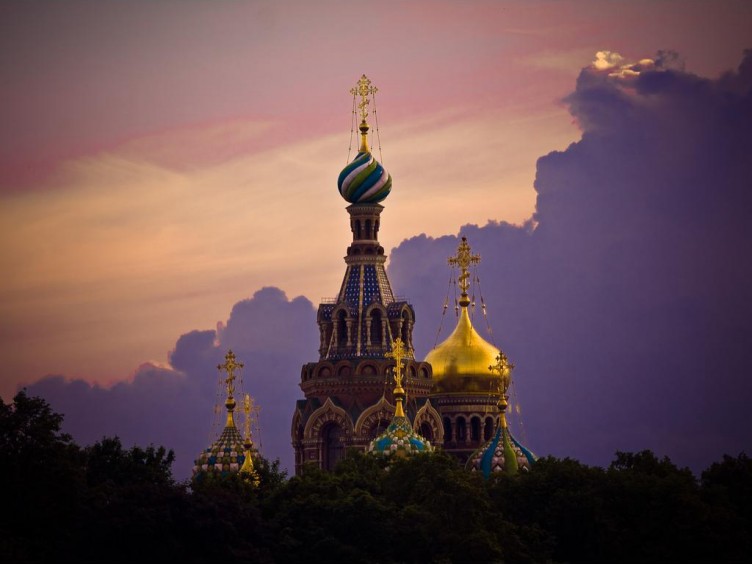
St. Petersburg, Russia, is celebrating its 20th anniversary of being “St. Petersburg” this year. The city was called “Leningrad” for the 67 years preceding the name change to “St. Petersburg” in 1991. Today, St. Petersburg is a bustling metropolis of just under 5 million residents. Its rich modern culture combined with is significant historical and cultural heritage makes this city a popular tourist destination. Second in population to Moscow, St. Petersburg (or more commonly just “Petersburg”) has a very large number of cultural sites, including more than 220 museums, 2000 libraries, over 80 theaters, 100 concert organizations, and 45 galleries / exhibition halls. Some of the more famous tourist stops are the Cathedral of the Resurrection of Christ (aka Church of the Savior on Spilled Blood), Catherine Palace, Peterhof Palace and Garden, the Smolny Convent, St. Isaac’s Cathedral, the State Hermitage Museum and Winter Palace, and Mariinsky Theater, among many others. See more pictures of St. Petersburg, Russia
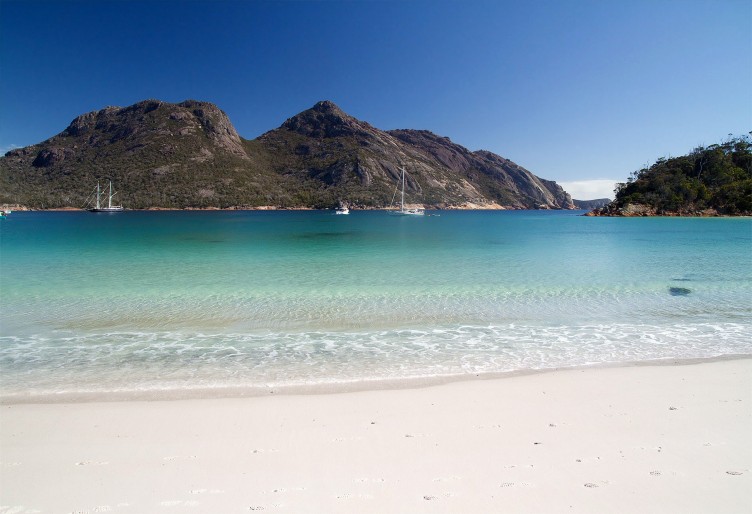
On the east coast of the island state of Tasmania, south of Australia, you will find the lovely Freycinet National Park, home to the stunning Wineglass Bay. Some notable feature of Wineglass Bay, besides its distinctive “wineglass” shape, are some interesting pink granite peaks standing in a line on the beach. These are called “The Hazards”, and the beach they stand on is often referred to as Hazards Beach. Australians have long known about this haven for fishing, boating, sea kayaking, rock climbing, and fun in the sun, but so far this lovely slice of heaven isn’t on the rest of the world’s radar. That’s partially due to this area of Tasmania being somewhat hard to travel to. The nearest airport is in Launceston, a 2 hour drive from Freycinet National Park. See more pictures of Wineglass Bay, Freycinet National Park, Tasmania, Australia
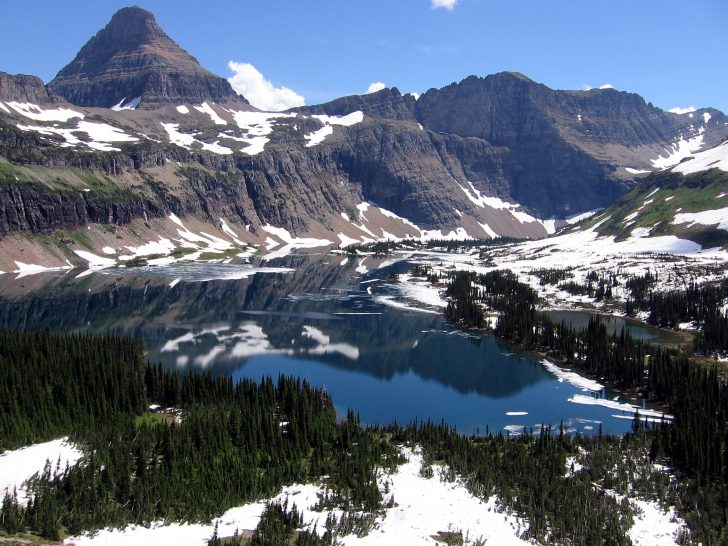
The famously beautiful Glacier National Park is located in the US state of Montana. The park is massively large, encompassing over 1,000,000 acres (4,000 square km). In the mid 1800s the park was named for its roughly 150 glaciers, though only 25 remain today and it’s estimated that all the glaciers will have melted by 2030. With over 130 lakes, two mountain ranges, over 700 miles of hiking trails, and many miles of scenic road, the park is a popular hiking, camping, and scenic driving destination for all manner of tourist. The nearest airport is in Kalispell, Montana, and the Amtrak train line stops at East and West Glacier, but most visitors choose to drive to the park. The park is also home to historic chalets and hotels if you’re looking for a more relaxed than rugged experience. See more pictures of Glacier National Park, Montana, USA
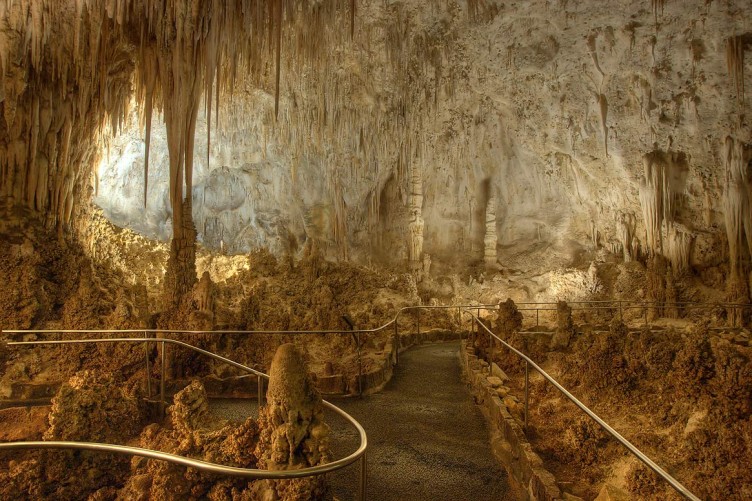
Carlsbad Caverns National Park, named for the nearest town of Carlsbad, is located in southeastern New Mexico. It is part of the Guadalupe Mountains. The limestone cavern includes many chambers, the largest of which is called the Big Room and is 4,000 feet 1,219 m) long, 625 feet (190.5 m) wide, and 350 feet (about 107 m) high at the highest point. This chamber is the 7th largest in the world and the 3rd largest on the North American continent. Visitors can choose to explore the caves via a hike down from the natural entrance, or take the elevator directly to the Underground Lunchroom 750 feet (230 m) below the surface. Visitors can take a ranger-guided or a self-guided tour through the caverns. For hours of desperation and more information, see the Carlsbad Caverns National Park official website. See more pictures of Carlsbad Caverns, New Mexico, USA
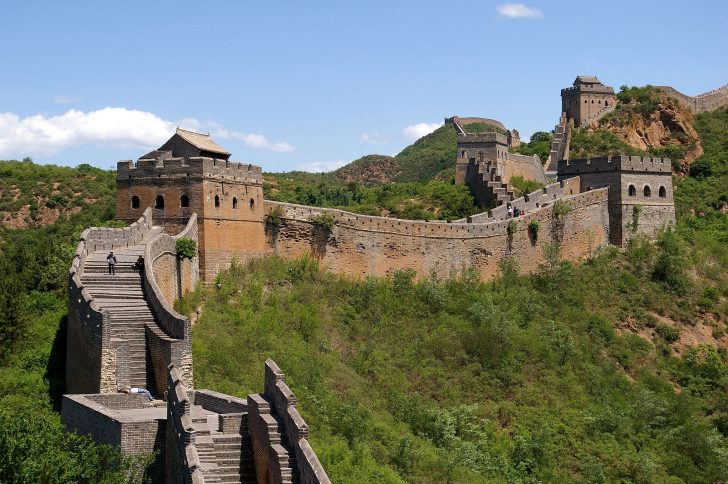
The Great Wall of China runs from Shanhaiguan in the east, to Lop Nur in the west, spanning 8,851.8 km (5,500.3 miles) of Northern China. It was arguably the longest running work in progress in history. Construction of the Great Wall began in the 5th century BCE, with rebuilding and maintenance efforts continuing into the 16th century CE. Today, the Great Wall of China is a must see destination for visitors to China. Many of it’s popular sections are well maintained. In some areas, tourists can climb the wall and then opt for a zip-line ride back down. The Great Wall of China is, of course, a UNESCO World Heritage Site. See more pictures of Great Wall of China, China
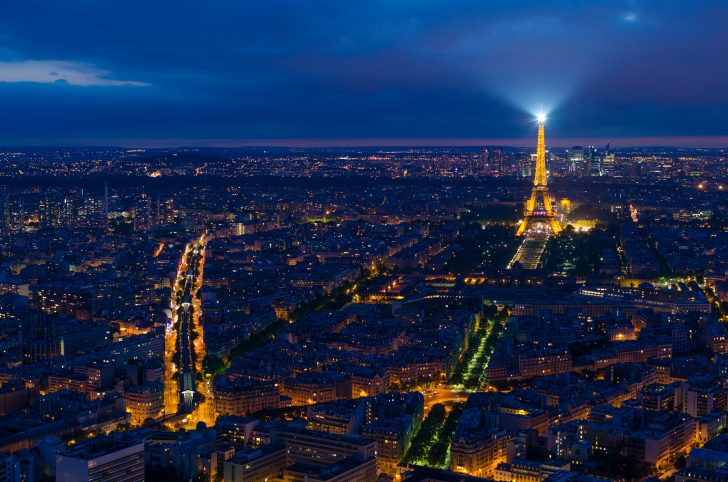
Paris, the capital of France, and to many, the cultural capital of the world, has been a prominent tourist destination for decades. Yearly, over 45 million people visit Paris to see an experience its fascinating sights and rich culture. Most famous of the sights is the stunning Eiffel Tower which dominates the Paris skyline. Other popular attractions include the Louvre Museum, Champs-Élysées, Arc de Triomphe, and Notre Dame cathedral. Paris is also home to multiple opera houses, endless exquisite restaurants, and incredibly hotels. It’s a tourist friendly city that is easy to explore on foot, by bike, hop-on hop-off bus, or public transportation. See more pictures of Paris, France
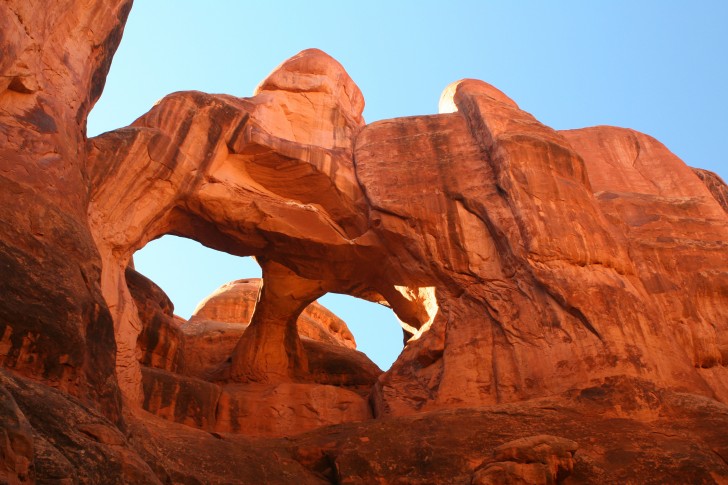
Utah is known for its impossible canyons and rock formations. Arches National Park in Eastern Utah is one of the most impressive. Here, natural sandstone arches, formed over millions of years when salt beds covered the area, create an amazing orange brown landscape. The area has a rich history as well as fascinating geology, it was home to the Ute and Paiute tribes. Ute petroglyphs from around 250 years ago can still be seen today. Bryce Canyon, also in Utah, should not be overlooked as a destination if beautiful rock formations captivate you. See more pictures of Arches National Park, Utah, USA
In Mono County, California, just Northeast of Yosemite National Park, lies a fascinating 760,000 year old saline lake. Mono Lake has no outlet to the ocean, and has become very salty and alkaline. The most notable feature of Mono Lake is it strange tufa formations, giving the lake an other worldly or moon-like quality. The tufa at Mono Lake are limestone formations that were once underwater but have slowly been exposed as the lake’s water evaporated. Tufa deposits are also found at Plitvice Lakes National Park, Croatia. See more pictures of Mono Lake, California, USA